your dead
We all know how you die, you lose all your health. And since health is wealth, the dead are poor. But sometimes, rather than steady financial collapse, a market crash causes a depression and/or a recession. Investment portfolio, insider trading, fungible.
This is a post about instakill effects in videogames. Inflation.
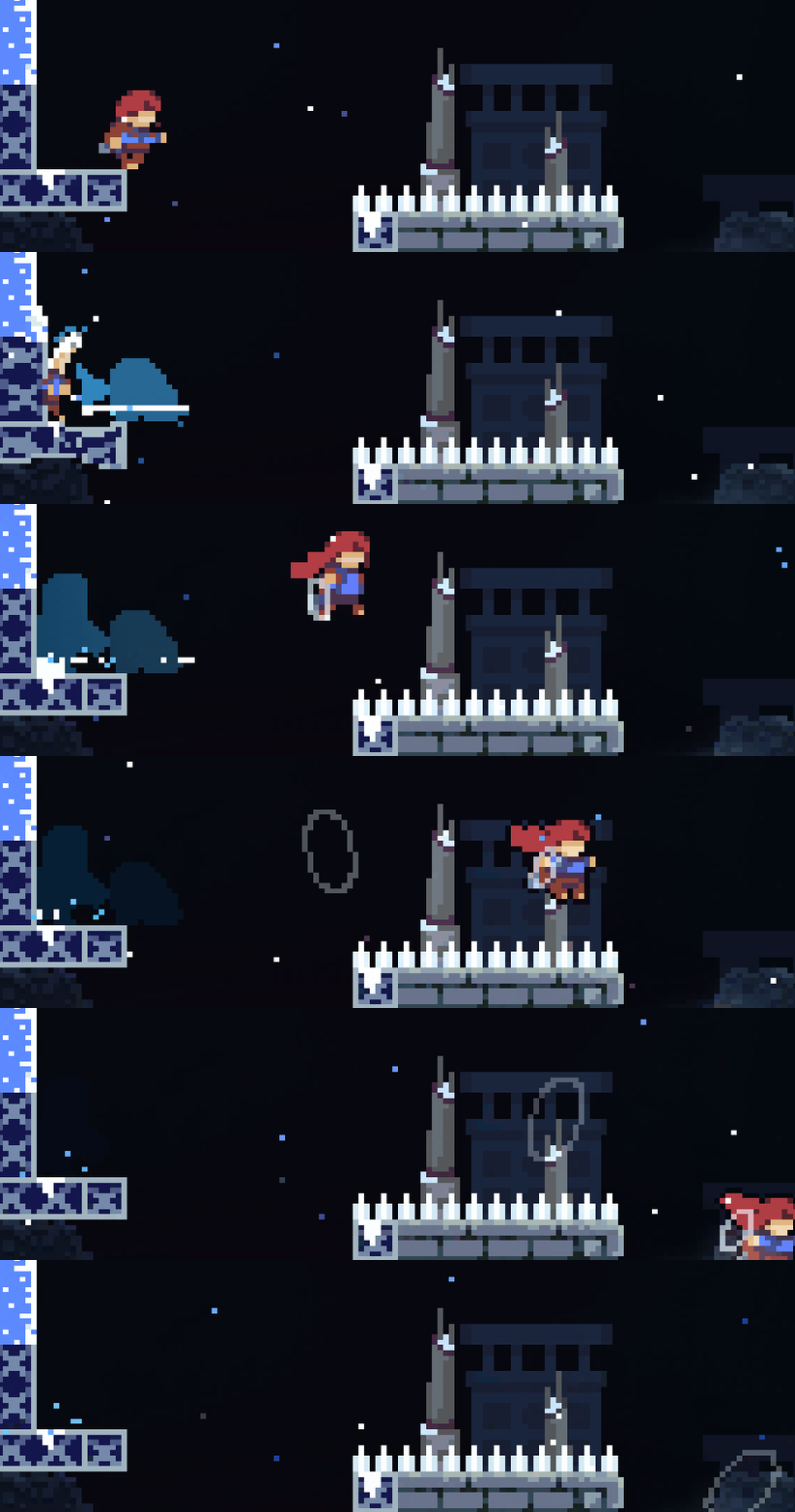
Classic instakill effects can be found in platform games, commonly in the form of water, lava, spikes or an endless pit. These are commonly referred to as 'death pits', because they are pits that cause death. These have a pretty obvious use, to make certain sections harder. Instead of freely being able to retry if they mess up a jump, players now need to restart from the beginning of that section, level, or even game. This can range from a minor to a major setback, with majors being largely responsible for the roaring trade in controllers. Commodity. How frequent and punishing these death pits are is tied into a platformer's central design ethos, is there combat in the game? how long are the game's levels? does the player have lives? All of these (and more) factors play into how these environmental hazards are used. In Celeste, the central design of the game hinges around challenging but short screens, with the deadly hazards causing death on contact. The frustration of these instakill effects is mitigated by the fact that you can get back to the same position in a few seconds, and you haven't got any lives to waste. While the inclusion of a death counter has led to community-created 'zero deffs' challenges, the game doesn't penalise you at all for dying - it just wants to see you complete each screen no matter how many tries it takes. As each screen in Celeste is almost like a little puzzle, players will need to experiment to figure out the solutions - lives and permadeath would go against this entire premise. Similarly, not dying would as well. If players had to hike back to where they just fell down from, then Celeste's speedy pace would be shattered, and players would likely get frustrated far more quickly than the sweet, instant release of instadeath.
Lives and instakill are balanced very simply, by not being as hard as Celeste. Which, uh, isn't hard at all, actually. These instakills are more punishing though, as you're less likely to fall victim to them. In Super Mario Bros, touching an enemy or any aforementioned hazards will kill Mario (unless he is big Mario then he will become small Mario you know how Mario works). This works, because players should have all the tools and skills they need to avoid being hit, taught by the game's iconic opening levels. Subsequent levels build on these skills, pacing the introduction of new hazards to keep players engaged but not overwhelmed. Mario's simple combat system of 'jump on their head' takes the instakill or be instakilled approach, where it's very easy to kill enemies but very punishing if you mess up. i also need to mention that this and other games were designed to be played in arcades, so these instakill game over scenarios had a secondary purpose of gobbling up the loose change of gamers everywhere. The key is to not make these instakills TOO punishing or frequent, as if they're too oppressive then gamers will give up and not spend those precious coins on another try - but if the game is too easy then gamers won't need another try! While these are valid design choices from a pure gameplay perspective, it's important to note the truckloads of bits these games were raking in. GDP.
The hazards described above are parts of a game's environment, even the sapient enemies are little more than moving obstacles to be jumped on or touched by. In games that have deeper combat systems than pogoing, enemies become actual enemies, with a whole new set of possibilities for instakills. Depending on the game, these instakill attacks will likely be heavily telegraphed, as being instantly killed out of nowhere is pretty unfun. For a bad example see Resident Evil 6, a bad game, the worst Resident Evil game, a terrible game. i've explained the skeleton of Resident Evil's gameplay loop enough times before, enemies are lethal but typically easy to deal with except in swarms. RE6 largely follows this, but some enemies have dreaded instakill attacks. By itself, this isn't too bad. Plenty of games have pulled this off, but what makes it work is whether the surrounding mechanics can support it. In RE6, everything is the same shade of greyish mud and all of their animations look the same. You do have a dodge roll, but it's clunky and doesn't grant any invincibility. Also, FORCED CAMERA ANGLES. If an important event happens to occur while in combat, your camera will be stuck looking at it while whatever story beat it is plays out, messing with your directional commands and making it so that you can't see the enemy readying an instakill attack behind you. Also, your character has a tendency to fall over sometimes when they get shot, and some enemies can ready an instakill attack while you're lying down to hit you when you get up without any chance to dodge. And some can even just do it while you're on the ground. It's a really bad game.
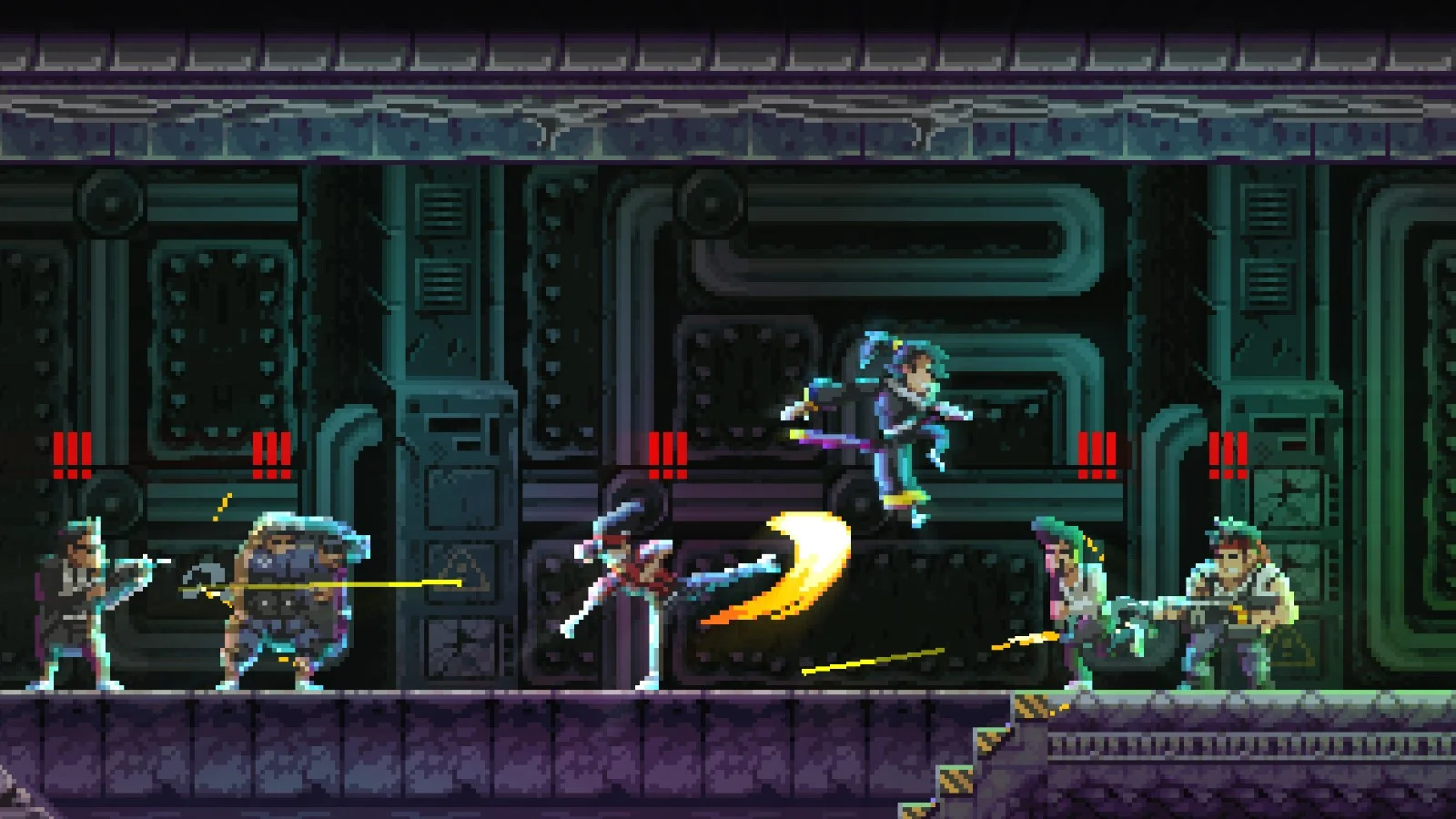
Katana Zero is a game where the player dies in a single hit. Every single enemy will kill you in a single punch, sword slash, bullet or grenade. Katana Zero is one of the best games i have ever played. Crucially, it gives the player the tools that they need to avoid these attacks - a functioning dodge roll, the ability to parry attacks, and most importantly the ability to slow down time. This breakneck kill-or-be-killed pace works because players equally have the opportunity to instakill - as all enemies die in a single sword slash or miscellaneous projectile. This puts heavy emphasis on the player dodging and parrying attacks, which Katana Zero enables due to its excellent movement system and timey-wimey shenanigans. Similarly to Celeste, sections are also fairly short - encouraging players to give different strategies a go and experiment with the mechanics. A similar approach can be found in Devil May Cry's optional Heaven or Hell mode - which makes both the player and every enemy die in a single hit. This turns combat encounters into an exhilirating game of observation and counterattacking, as most deaths are likely going to be due to not seeing an enemy's attack coming and not dodging in time or using an innapropriate move. And there's also Hell or Hell where the player dies in one hit but all enemies have regular health. This is the same design philosophy as Heaven/Hell, just harder.
Everything we've talked about so far has been single player. Instakill effects in multiplayer are much rarer, for reasons i shall illustrate. Board of directors. Some multiplayer games will have environmental instakills, these are fairly common in FPSs. FPSs? FPS's? FPS'? FPSes? An environmental hazard is a good way to make a map more interesting, as it adds something for the players to focus on that isn't just enemy players. Admittedly this usually just extends to 'oh that's a cliff' but it's still there. And environmental hazards can even be used as a weapon by other players! Lots of weapons in TF2 have knockback effects, Scout's Force a' Nature, Pyro's airblast, Demoman's Loose Cannon. These can be used to hilariously knock enemies off ledges and into other environmental hazards, which honestly never gets old it's one of life's simplest and greatest pleasures. Perhaps one of the most iconic maps for these shenanigans is Upward, where there are a plethora of potential launch sites for your victims. Some of the most entertaining death pits are found on Halloween maps, including the aptly named Pit of Death. These drops last an extended amount of time, giving your character enough time to scream before reaching the bottom of the pit - some maps even regurgitating your ragdoll above the central arena to fly above the other players it's great stuff. TF2 also has some environmental hazards above falling, one of my favourite maps is Banana Bay. This is a payload race map the sees players push their carts towards the finish line, through twisty turny tropical tunnels all while shooting at each other. The important thing though, is the train. A trainline runs through the center of the map, with the end goal being for each team to hold their cart on the tracks long enough for the train to crash into it. and explode. The train periodically runs along the tracks, with flashing lights, alarms and opening gates indicating to players that it is on its way. As you might have guessed, being hit by the train instantly kills the player and sends their ragdoll flying, which is funny. Particularly brave mercenaries can also try and hitch a ride on the train, delivering them straight to the enemy base and into the action if they do so. Aside from just being funny, the train serves as a legitimate hazard and map feature in the game. There's a reason Scout's 'Meet the Team' trailer shows him ducking in front of a train to avoid enemies.

But this is still just environmental effects! And there's even an instakill in the clip you had above! i hear you cry. And you are correct, so to finish things off let's talk about some P on P instakill action. Adressing the clip above, what i got was a random crit. These are a feature in TF2 that make a lot of people angry. i am not one of those people. Basically, almost every weapon has a chance to crit for massively increased damage - usually killing every non soldier or heavy in a single hit. These are a constant subject of debate in TF2, i think they're perfect for the casual 'let's shoot and/or beat each other to death in a fun combat arena' type of gameplay, but can understand the more competitively minded gamers putting a hole through their wall if they get critted. Which is why they should play competitive mode where they're disabled. TF2's other instakill is found in Spy's french fingers, at the end of his knife. When plunged into an enemy's back this will kill them instantly, with the entirety of Spy's gameplan revolving around this. This instakill is fairified by it being really easy to prevent - by moving your mouse a few cm to the left or right. This easiness to counter means Spy is most effective when he picks his moments, creating a great gameplay dynamic of stealth and map knowledge and TF2 being a really good game. You might be wondering why Sniper isn't mentioned, can't he headshot? He can, but this isn't an instakill. Headshots with the sniper rifle do 150 damage, enough to kill roughly half of the roster provided they're not overhealed. Whereas backstabs will always kill in one hit. In a lot of shooters headshots will be an instant kill, whether they work or not in a game depends on the surrounding mechanics. TF2 doesn't have headshots (excluding scoped sniper rifles) because the focus on headshotting would conflict with the game's focus on frantic horizontal and vertical movement with solid hitboxes and powerful burst damage weapons. In a game like Valorant, the slower pace and methodical approach to combat mean that everyone dies with a few headshots from any weapon - rewarding players for being unpredictable and lying in wait for the perfect opportunity.

True instakills can be tricky to balance, and there are several ways that devs can go about it. In One Punch Man: A Hero Nobody Knows, all of Saitama's attacks will kill in one hit - because he's One Punch Man. This is balanced by him being late to the battle, if you pick Saitama as a character you'll have to make do with the other 2 members of your team until he arrives. This is a good way of balancing Saitama while keeping his identity, it fits perfectly for his character and makes things fair. Another example of instakills are the Pokemon games, certain moves will instantly kill an enemy 'mon if they connect. The key word here is 'if', these moves have terrible accuracy and can only be used 5 times before their PP needs to be replenished. They're also hard coded to miss if the Pokemon using it is a lower level than the target, meaning a legendary dragon cannot be killed by a lvl 1 crab with a guillotine. This is for obvious reasons. But you can still do the focus sash + endeavour + quick attack strat.
Depending on how quickly you read, this post was either an instakill or a Diavolo kind of situation. ISAs, overdraft, cash-in-hand. Thanks for reading.